Sunday, February 27, 2011

Tips for Your Commercial Photography Portfolio


Cuba Gallery: Urban / retro / vintage / color / bird / design / light / photography by ►CubaGallery


Photo Credit: celtics baby clothes


A great commercial photography portfolio is your calling card in the industry, and your ticket to winning clients and landing jobs as a professional photographer. Read on to learn 3 key tips that will help make your commercial photography portfolio shine, so prepare to start getting the gigs you need to advance your career. These commercial photography portfolio tips will take your clips to the next level, so that you can scale the ladder to your dream job.

1. Offer Your Commercial Photography Portfolio In A Variety Of Formats

When you hand out your commercial photography portfolio, one of the things it is crucial to communicate to a client is that when they hire you, you will do everything you can to make his or her life easy. You want to be seen as professional and responsive, and as someone who proactively anticipates your client's needs. One great way to make this impression fast is to have your commercial photography portfolio available in a number of formats, including in print, on CD, and online, as AllArtSchools suggests. When you follow this advice and have print, digital, and virtual clips available, your first question to a client can always be "What's easiest for you?", a sentence that will be music to any prospective employer's ears.

2. Pitch Your Commercial Photography Portfolio Directly To The Job At Hand.

Instead of having one commercial photography portfolio, have several, one targeted to each kind of work you're hoping to do in your career. Have you taken some gorgeous nature images? That's great, but a client who's hiring for a fashion shoot won't care! A prospective employer will hire the person who seems most likely to do a great job on the specific project at hand, so make sure everything in the commercial photography portfolio you hand to a possible client is directly relevant to the task they'll need you to do. Try doing as PhotoCritic suggests, and put together a portfolio of just your fashion work, another that highlights your nature shots, another for photos you've taken of products, and so on for each genre you've got clips for, and are seeking work in. That way, as you move forward in applying for a variety of jobs, you'll always have your most specifically relevant work at your fingertips, ready to impress your next boss.

3. Include The Right Written Information In Your Commercial Photography Portfolio.

As Marketing For Photographers and Photography points out, you don't need to include much written information in your commercial photography portfolio. However, what you do put in can make or break a client's interest in your work. By reducing the amount of text, you help keep your prospective employer engaged with the images you're presenting, which is the goal of your commercial photography portfolio. You don't need to put forward the technical information for each picture, like your equipment choices or shutter speed, because the client only cares about your end result, not about the road you took to get the shot. You should offer a brief description of what each picture is, to provide some context, and a clean, professional, and specific title for each shot, so that it's easy for clients to reference a particular image in your commercial photography portfolio when they're in discussion with you, or with any colleagues who may be involved in making the decision to hire you.


Photography Tips and Tricks


Edinburgh Photography, Gracemount Flats, High Rise by John Gilchrist


photo source


Photography isn't just about making memories, it's about art. Be artistic. Here are a few tips and tricks to help you make those photos, picture perfect.

To make those dull photos turn into works of art, consider these questions:
Decide if you want the full subject, half, or even a close up. How much background do you want, or even foreground? Exactly how close do you want that close up? What details do you want to focus on? Do you want a vertical, horizontal, or tilted photograph? What angle do you want? What's the best lighting? What background do you want to use?

1. Placing the subject of interest. Choose how much of the subject you want photographed. (Example: you want full body, half body, or face shot.) If your subject fills the frame then it's okay to center it. If you are trying to get more of the background, try placing your subject to the right or left in the viewfinder. With a horizontal (laying down), try to place them at the top for more foreground, or at the bottom for more background. And you could even tilt the camera for a more funky picture. It all depends on what part of the scenery you want visible in the picture. Maybe you want that tree to your left and your subject to the right. Or the patch of flowers in front and the mountains in back. (I find it best to take my time and take shots of each possible way and several different poses. This way I know I'll find the best photograph with the most potential.)

2. Don't center. The circle, plus sign, or brackets in the middle of your viewfinder is for focusing and isn't necessarily for centering the subject. Placing your subject in t he circle could leave you with a lot of empty and useless space on your photograph. Too much background and not enough subject. If your subject fills the frame then it is okay to center them. (Sometimes you just have to ignore the focus points and concentrate on your subjects placement in the frame instead.)

3. Camera angles. Walk around the subject, shoot from all angles and sides. This will help you to get the best lighting, background, and different aspects of the subject. You will want to find the best angle for all three. Pick a background that will not distract your viewers from the subject of interest. (I choose my backgrounds to where there's not much clutter. Sometimes I will use a plain sheet or blanket and place it behind the subject, but making sure it does not clash or blend.)

4. Reflectors. In some situations you just can't get enough light or you perhaps you just want more. To use a light reflector, place it in a position where it reflects light onto the subject without it getting in the frame. Use this if your shot is coming out too dark or there are too many shadows. On night shots that you need more than your flash can put out, place a lamp (or several) near your subject, but out of sight, and use the light reflectors to bounce from the lamps to where needed. (Some homemade light reflectors can be real cheap to make. You could use white cardboard, or if you can't find this, then simply take any piece and paint it white. For more light, place tin foil over your piece of cardboard, smooth it out, and reflect where needed.)

5. Shading. Using the same piece of cardboard as mentioned above, you can use this to block the light as well. You could make this easier by painting one side white and the other black. Or just place the piece in front of the lamp or sun to dismiss light from your subject. On most cameras you can use a sunshade for the lens, some cameras come with this, some you buy separate. This won't keep light from your subject, but it will block the light from causing a flare effect on the outcome of your photograph. The sunshade just clicks into place around your lens, and keeps the lens safe from any glaring.

6. Outside daylight. Direct sunlight is when you place the sun behind the camera, but in front of the subject. Using direct sunlight can cause shadows on the subjects face and possibly their eyes squinting. Back light is when the sun is behind the subject and in front of the camera. This will lighten the photo and cause much softer features on the subject.

7. Preventing red eye. Red eye is caused when the flash is too close to the lens. Ways to prevent this are: Attach a larger flash to your camera, t his way the flash is further from the lens. Or if buying a camera, look for one with the flash located far from the lens. Try getting closer to your subject when needing the flash. (Before I bought my camera with built in red eye correction, I had to use a photo editing program to correct these problems. I was even scanning my pictures and still having to edit when I was using my film camera that was hopeless against red eye.)

Saturday, February 26, 2011

Baby Photos and the Art of Photography


Cuba Gallery: Street photography by ►CubaGallery


source,photo source


"Seize the Moment" This is one of my favorite sayings. How often do we take advantage of the MOMENT? The moment is instantaneous. What happens right now will not happen again, ever! Will you remember the moment?

Photography is the art of capturing an image of that moment. It could be a face, a plant or a mountain. It could be something that will be there tomorrow but will look different or it could be something that won't be seen again. I read in a comic book once of a conversation between a father and son. The young son asked his father why old photos were always in black and white and new photos were in color? His father said there was always color film in the old days, but the world was only in black and white then! It was funny but some of our most famous photography "artist" worked in black and white such as Ansel Adams. He and so many others were artists that couldn't make up their work but had to capture it at the right instant of time.

I was going through some photos with my wife the other day. Some of them would take my breath away. They were images captured in time of babies in our family. Some of these babies are now 5, 8, 10, 14, 17 years of age. They are my children, nephews and nieces. Some of them are of my wife and her sisters. They're baby pictures! They are an instant caught in time. They were either taken by my in-laws or given to them as gifts. They may not have been present at the time the photo was taken but they had that image of that instant in time to carry with them until they died. These images were no different than the images that Ansel Adams gave me as a gift when he photographed San Francisco bay where the Golden Gate Bridge is before it was built. He gave me a memory that I could not have had otherwise. My family and my sister-in-laws' families gave my mother -in-law and father-in-law memories that they would never have had if it weren't for photography.

Even if you aren't a great photographer, a picture is still worth a 1,000 words. When a newborn baby comes home from the hospital and the family and extended family come by to see him or her, what comes out? Of course, the cameras come out and start snapping. I learned two schools of thought from photographers that I took courses from. One was in a roll of 36 exposures, 34 better be the top quality photos that you intend to sell. The other photographer taught that in a roll of 36 exposures, expect 2-3 quality photos that are worthy of selling. What I learned from this is spend your time taking posed photos but keep snapping for candid photos.

If you are taking photos of babies or children, take your time for both types of photos. I personally do not like posed photography but that's me. I prefer to capture a child that is at play trying to solve a problem or just being natural. I like the expressions when they are deep in thought or interacting with other children. I found a photo of my son that I took through a car window when he was five holding his hand up with his fingers stretched out. That photo is so memorable to me because I sent it to my mother before she passed away. It was exactly the same photo that my mother took of me when I was five years old.

May I suggest that you seriously consider studying photography to get a better understanding of the capabilities of using a camera properly? If you are just starting out, you need to start with the basics and work from there. Here is a good site to learn various aspects of photography from: http://www.photographytips.com/ For some detailed photography, study someone like Ansel Adams and look at this website: http://www.anseladams.com/


Tips for Your Commercial Photography Portfolio


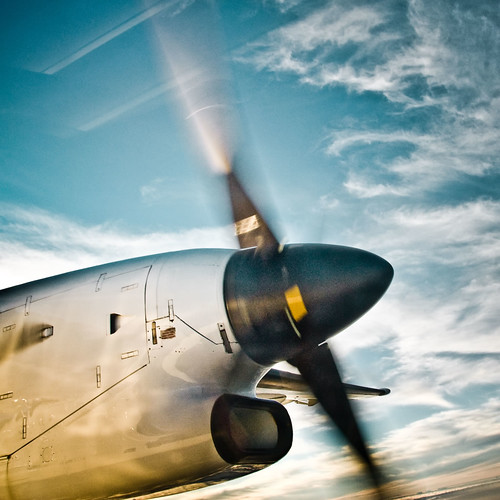
Cuba Gallery: Clouds / plane / blue sky / photography by ►CubaGallery


source


A great commercial photography portfolio is your calling card in the industry, and your ticket to winning clients and landing jobs as a professional photographer. Read on to learn 3 key tips that will help make your commercial photography portfolio shine, so prepare to start getting the gigs you need to advance your career. These commercial photography portfolio tips will take your clips to the next level, so that you can scale the ladder to your dream job.

1. Offer Your Commercial Photography Portfolio In A Variety Of Formats

When you hand out your commercial photography portfolio, one of the things it is crucial to communicate to a client is that when they hire you, you will do everything you can to make his or her life easy. You want to be seen as professional and responsive, and as someone who proactively anticipates your client's needs. One great way to make this impression fast is to have your commercial photography portfolio available in a number of formats, including in print, on CD, and online, as AllArtSchools suggests. When you follow this advice and have print, digital, and virtual clips available, your first question to a client can always be "What's easiest for you?", a sentence that will be music to any prospective employer's ears.

2. Pitch Your Commercial Photography Portfolio Directly To The Job At Hand.

Instead of having one commercial photography portfolio, have several, one targeted to each kind of work you're hoping to do in your career. Have you taken some gorgeous nature images? That's great, but a client who's hiring for a fashion shoot won't care! A prospective employer will hire the person who seems most likely to do a great job on the specific project at hand, so make sure everything in the commercial photography portfolio you hand to a possible client is directly relevant to the task they'll need you to do. Try doing as PhotoCritic suggests, and put together a portfolio of just your fashion work, another that highlights your nature shots, another for photos you've taken of products, and so on for each genre you've got clips for, and are seeking work in. That way, as you move forward in applying for a variety of jobs, you'll always have your most specifically relevant work at your fingertips, ready to impress your next boss.

3. Include The Right Written Information In Your Commercial Photography Portfolio.

As Marketing For Photographers and Photography points out, you don't need to include much written information in your commercial photography portfolio. However, what you do put in can make or break a client's interest in your work. By reducing the amount of text, you help keep your prospective employer engaged with the images you're presenting, which is the goal of your commercial photography portfolio. You don't need to put forward the technical information for each picture, like your equipment choices or shutter speed, because the client only cares about your end result, not about the road you took to get the shot. You should offer a brief description of what each picture is, to provide some context, and a clean, professional, and specific title for each shot, so that it's easy for clients to reference a particular image in your commercial photography portfolio when they're in discussion with you, or with any colleagues who may be involved in making the decision to hire you.